


Our research belongs to cross-disciplinary field combining artificial intelligence and health industries. More specifically, we use deep learning techniques to explore protein science and biomaterial engineering.
Why are protein materials important?
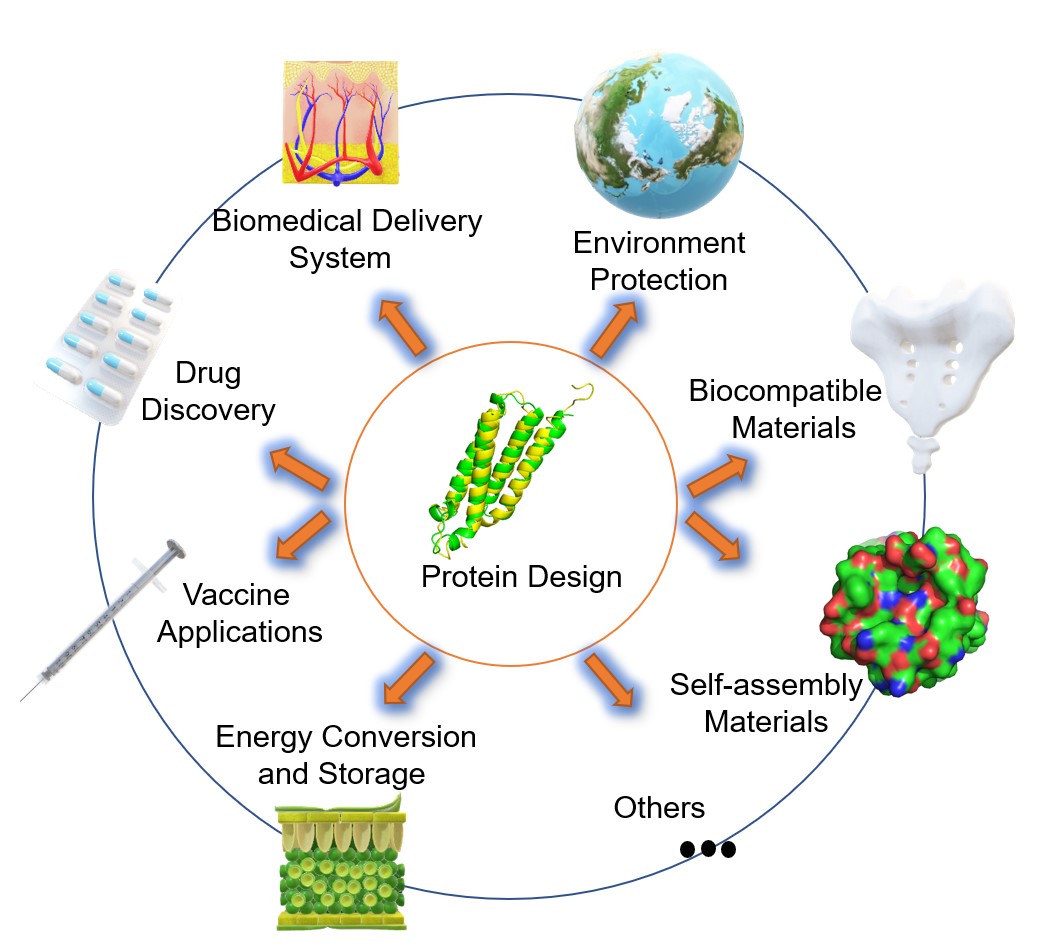
Among all molecules in our sophisticated and wonderful world, proteins that participate in most biochemical reactions have been under the spotlight of fundamental scientific researches as well as medical and industrial applications for decades. A wide variety of native proteins such as nuclear proteins, membrane proteins, hemoproteins, lipoproteins, heat-shock proteins, contractile proteins, etc. manifest strikingly excellent properties compared with man-made machines, including extremely high efficiency, economy and precision in operation, self-assembly upon synthesis and so on. Considering their enormous quantity, fantastic quality and consequent pluripotency, protein materials have attracted extensive attentions since they could provide possible solutions for many serious social challenges.
How can deep learning help us?
In a nutshell, deep learning trains an artificial neural network or a combination of related networks to approximate complicated unknown functions in a high dimensional abstract space. Artificial neurons or nodes with non-linear activations are connected by specific affine transformations with parameterized weights and biases, which are modified in each training step through the back propagation of gradients computed from losses, i.e. the differences between current network outputs and corresponding ground truths.
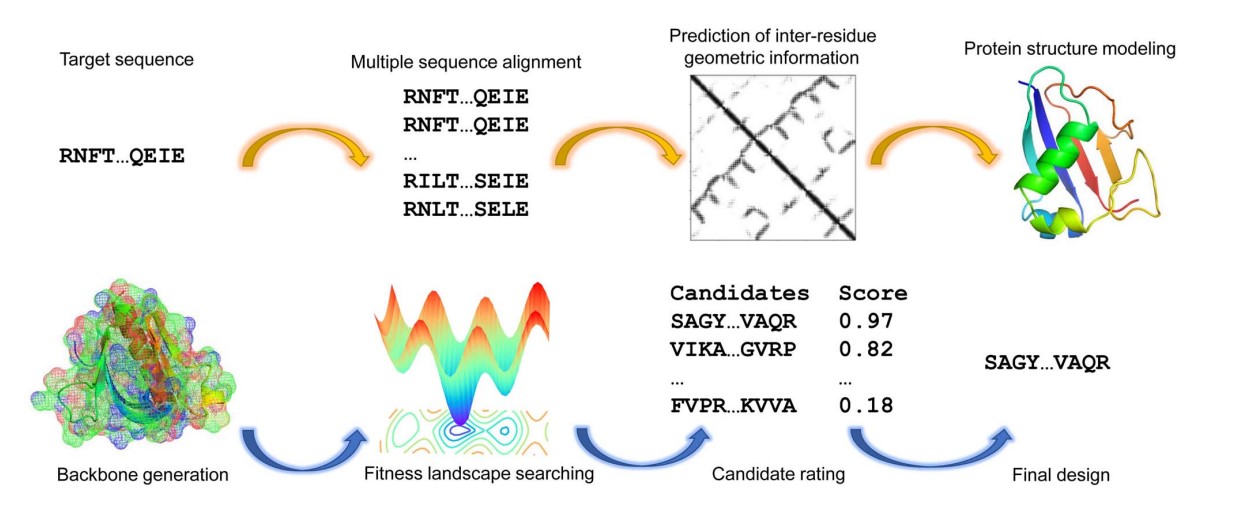
Deep learning offers the simplest and also the most general approximation and parameterization methodology for high-order statistics and potentials by enlarging the receptive field with the support of big data, and thus could be integrated into all domains of traditional biomaterial engineering approaches for further improvements and even breakthroughs. Besides, deep learning also sheds a light on the direct sequence design for specific functions or properties without the medium of structures for biomaterials. We are working on the cutting-edge of advanced biomaterial engineering methods based on deep learning and utilizing the benefits offered by them. Combining with many other advances that hugely promoted biomedical research, exemplified by DNA synthesis, protein structure prediction and protein manufacture, we are now leading and even creating the trends of health industries.
What do we want?
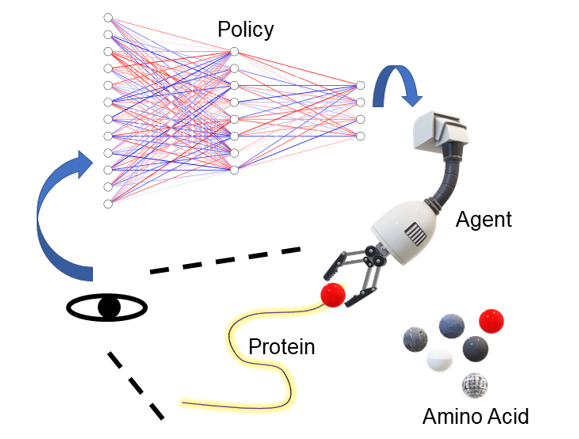
The long-term goal of ours is to elucidate the relations between the sequence, structure, and function of biomedical materials and to uncover the molecular mechanisms underlying different diseases. This will be accomplished by designing simple (yet realistic) models and by developing computational tools via deep learning techonologies. The objectives of our current research are to improve drug production by codon optimization, to increase drug stability by protein engineering, and to design proteins with specific therapeutic effects (inhibitors and vaccines).
Granted Research Projects within 2 years:
(Lead) 2021 “Double First-Class” University Research Fund: 300,000 yuan.
(Lead) 2022 Natural Science Foundation of Jiangsu Province: 200,000 yuan.
(Lead) 2022 High-Level Innovation and Entrepreneurship Talent Introduction Fund: 150,000 yuan.
(Lead) 2022 NSFC Fund: 300,000 yuan.
Update by School of Artificial Intelligence, NUIST